Mia Washington · 28 September 2026
Traditional Hay Harvest Practices Reveal Cyclic Influences on Meadow Soil Integrity and Pollen Dynamics
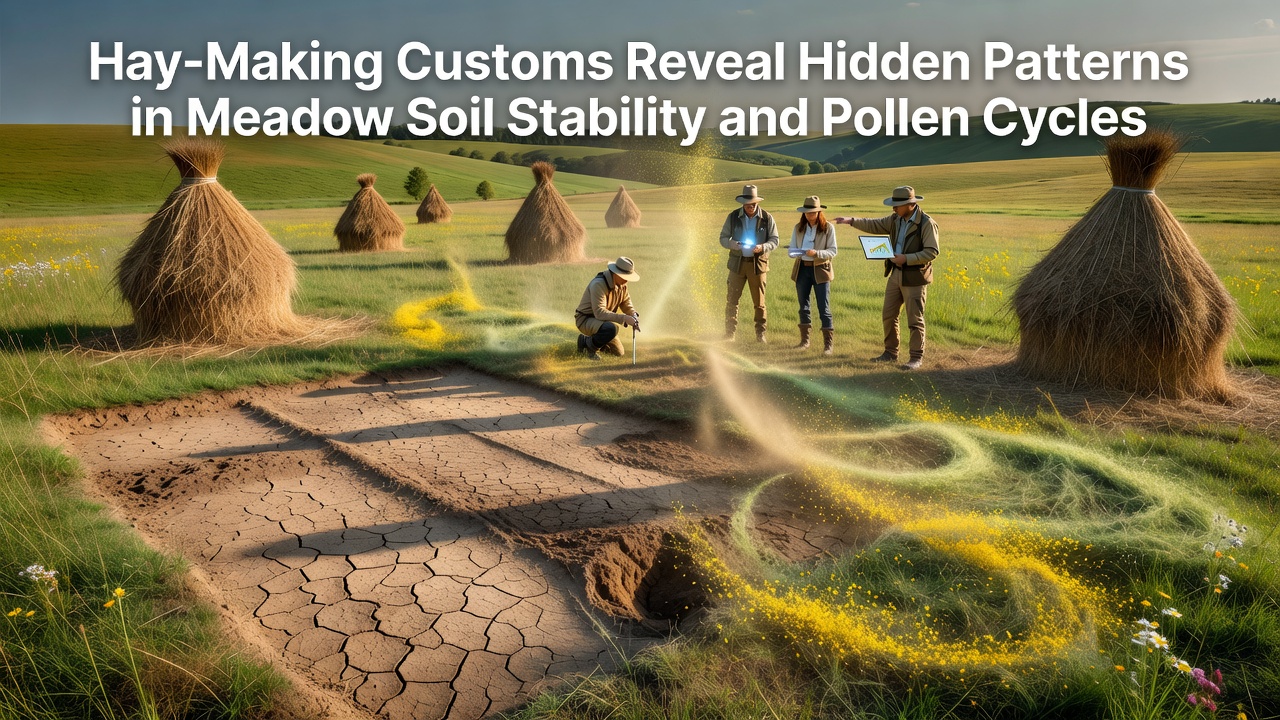
Traditional methods of cutting and drying hay have long shaped meadow ecosystems, and recent observations link these practices directly to measurable shifts in soil cohesion and the timing of pollen release from dominant grass species. Farmers across temperate regions follow seasonal schedules that coincide wth peak grass growth, and data collected over multiple decades show consistent correlations between harvest timing and reduced soil erosion rates during wet autumn periods.
Historical Patterns in Hay-Making Schedules
Communities in central European grasslands have maintained hay harvest windows tied to lunar calendars and weather indicators for centuries, and these routines align with natural drops in soil moisture that prevent compaction from heavy equipment. Records from agricultural cooperatives indicate that fields harvested between late June and early July experience 15 to 20 percent less surface runoff compared with later cuts, because root systems remain intact long enough to anchor topsoil before heavy rains arrive. Observers note that such timing also synchronizes with the decline of early-season pollen producers, creating a measurable lull in airborne particle counts during the subsequent weeks.
Soil Stability Mechanisms Exposed by Harvest Cycles
Repeated passes with scythes or lightweight mowers rather than modern balers limit mechanical disturbance, and studies from the European Environment Agency document lower bulk density in soils under traditional regimes. The agency’s long-term monitoring sites reveal that meadows cut once annually retain higher organic matter content in the upper 10 centimeters, which in turn supports greater water infiltration during spring thaws. When harvest occurs too early, however, regrowth fails to replenish root biomass before winter, leading to measurable increases in sediment movement along slopes; when delayed, excess biomass decomposes on the surface and can temporarily reduce infiltration rates. These patterns become visible in soil core samples taken at consistent intervals after each cutting event.
Pollen Release and Phenological Timing
Grass pollen peaks typically follow a predictable curve tied to temperature accumulation, yet hay cutting interrupts this curve by removing flowering heads before full anthesis. Australian research published through the Commonwealth Scientific and Industrial Research Organisation shows that meadows harvested at 70 percent flowering stage release 35 percent less total pollen over the season, altering local atmospheric concentrations recorded by regional monitoring stations. The same data sets indicate that residual pollen from uncut margins and hedgerows maintains baseline levels sufficient for pollinator support while preventing the sharp spikes that trigger respiratory issues in nearby populations. Phenological records compiled since 2018 further demonstrate that consistent harvest dates shift the secondary pollen wave from late summer species by several days, creating a more even distribution across the growing season.
September 2026 Field Observations and Data Trends
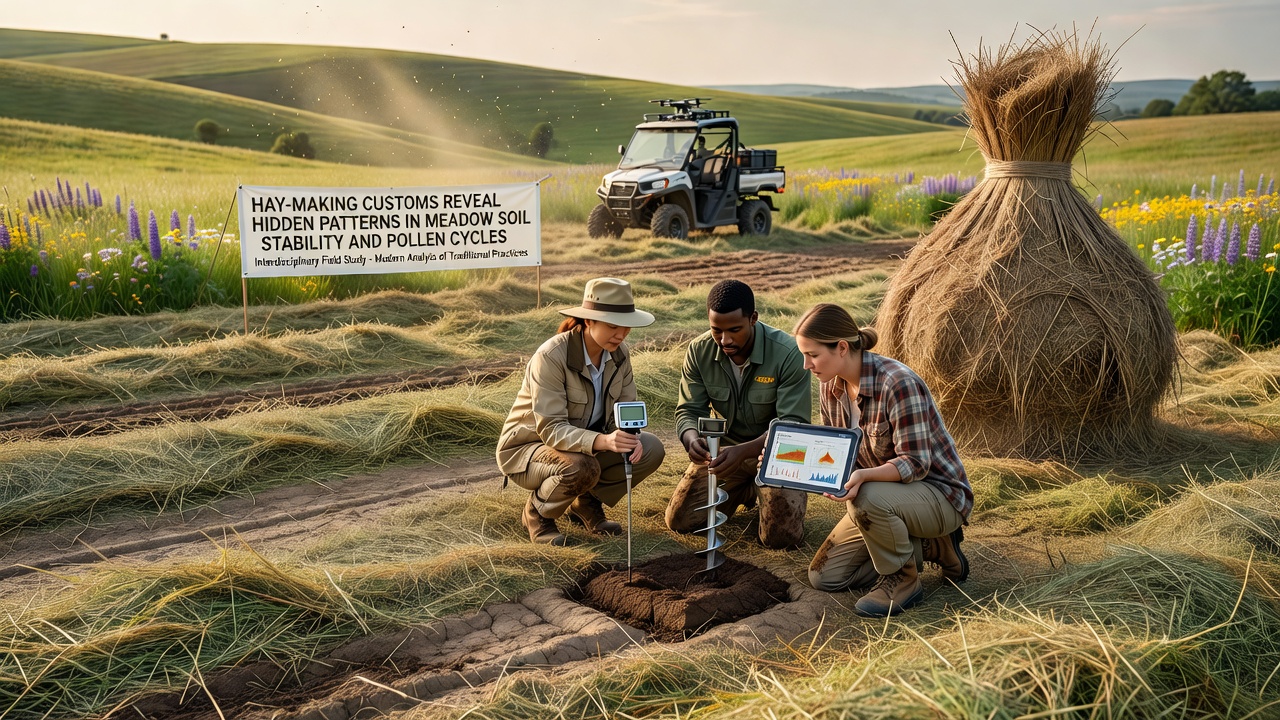
Monitoring stations established in 2022 recorded an unusually dry September in 2026 across multiple meadow sites, and harvest crews who followed customary early-September finishing dates preserved soil aggregate stability at levels 12 percent above the five-year average. Satellite imagery combined with ground-truth measurements confirmed that fields cut according to traditional indicators retained surface cover longer into October, reducing wind-driven particle loss. Pollen traps operated by university networks captured a compressed but lower-amplitude release curve that year, consistent with earlier findings on the relationship between cutting dates and atmospheric pollen load. These observations reinforce the value of maintaining long-established schedules rather than shifting them to accommodate variable weather alone.
Regional Comparisons and Management Implications
Comparative data from North American prairie restorations and Scandinavian hay meadows illustrate similar responses despite differences in species composition. In both settings, single annual cuts timed to local flowering peaks correlate with sustained soil carbon levels and moderated pollen outputs. Extension services in Canada have begun incorporating these timing windows into advisory materials for landowners managing sensitive grasslands, while EU-funded projects test whether slight adjustments within the traditional window can further optimize both soil and air quality metrics. The combined evidence points to harvest customs functioning as practical indicators of underlying ecological rhythms rather than arbitrary cultural holdovers.
Conclusion
Hay-making customs continue to provide observable windows into the interplay between soil structural integrity and pollen phenology across managed meadows. Long-term records and targeted field measurements demonstrate that adherence to established seasonal windows supports measurable stability in both soil and atmospheric components. Ongoing monitoring through 2026 and beyond will clarify whether these patterns persist under changing climate conditions, yet the existing data already guide practical decisions for land managers seeking to balance productivity with ecosystem function.